60 Types of Candy, Explained
A working taxonomy of 60 candy types in eight families, one line each, with a European example per type and the cases we import to match.
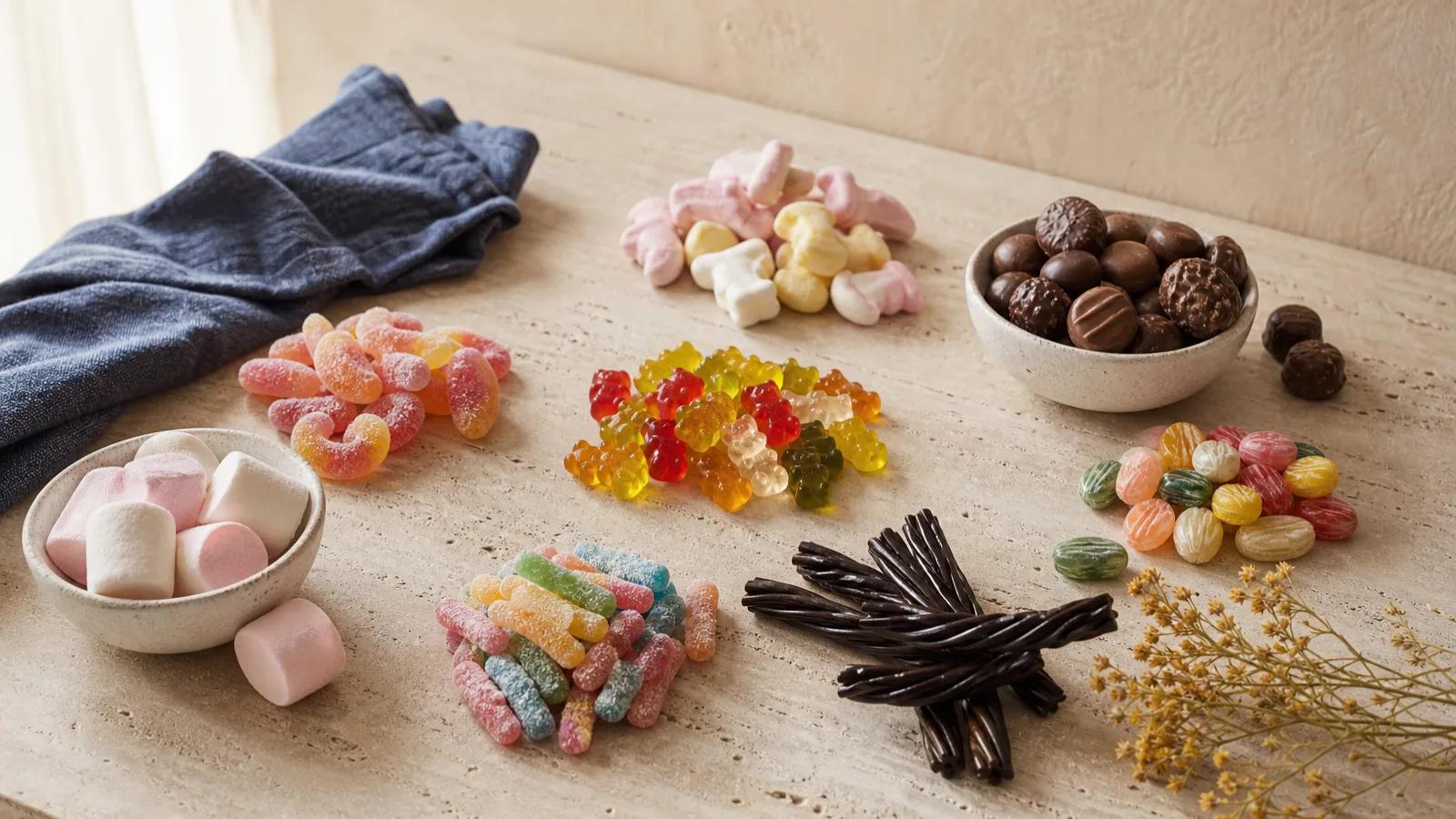
Candy types divide by base and texture before flavor: gummy and jelly, foam and marshmallow, licorice, sour, hard and pastille, chewy and caramel, chocolate, and seasonal. Those eight families cover almost everything on a European pick-and-mix wall, and this guide lists 60 named types inside them, one line each, each with a European example.
We import European candy into our California warehouse, so where a family runs through cases we hold, the list says so. Texture is the real divider ahead of flavor, and our Swedish candy textures map draws the same lines for shop sets, with the case notes buyers need.
What decides the family a candy belongs to?
Almost every candy starts the same way: sugar and glucose syrup boiled to a target moisture. Three decisions then split the shelf: how far the boil goes, what holds the piece together, and what is added afterward, whether air, acid or a coating.
How candy gets its texture
- Boiled to a glass: cook the syrup dry enough and it sets hard and clear. That is the hard candy family: boiled drops, rock and lollipops.
- Set with a binder: leave more water in the piece and add a gelling or texturising agent. Gelatin gives a springy bounce, starch a short clean bite, and pectin a faster melt. Our chewy candy guide works through the binder question in full.
- Whipped with air: the aerated family, light enough that a case looks huge. Swedish skum lives here.
- Coated after setting: an acid coat or a sugar shell sits on top of any base. That is a treatment, not a family of its own.
Color is a separate axis from texture. Some of the ingredient lists we hold name carmine, a color additive derived from an insect, which the FDA lists among color additives. Recipes change, so the printed pack is the authority.
The same flavor, five textures
One raspberry can arrive five ways, and the form changes the eating more than the flavor does.
- As a foam: light and collapsing, sweet first and gone quickly.
- As a firm gummy: springy and slow, with the flavor released through the chew.
- As a chew: dense and dry, holding one flavor for a full minute.
- As a sour piece: the same body under a sanded or sprayed acid coat, so the first bite is sharp.
- As a hard drop: glassy and long-lasting, with no chew at all.
What people get wrong: calling everything a gummy
- Gummy is a texture, not a category. A gummy is set firm; a jelly is set softer and shorter. The same factory often runs both.
- Foam is not the American marshmallow. Swedish skum is lighter and less sweet than a campfire marshmallow, and it is eaten as candy rather than toasted.
- Sour is a coating. Almost any base can be sanded or sprayed, which is why a sour section without texture range feels repetitive.
- Wine gums contain no wine. The name describes the old firm-gum style, not an ingredient.
What are gummy and jelly candies?
The gummy family holds its shape: a binder sets a cooked sugar mass so the piece pushes back before it gives. Jelly pieces sit one notch softer and shorter.
- Gummy bears: the shape that started the category in Germany, which HARIBO's history dates to a first bear in 1922.
- Wine gums: the firm, matte, slow-chewing style that Swedish calls vingummi, with no wine involved.
- Fruit gums: softer fruit-led pieces, often dusted with sugar.
- Gelée pieces: the tender, translucent Swedish gelé, set to break rather than bounce.
- Skulls: the modern Swedish staple, made in sour gummy and foam versions.
- Cola bottles: the bottle shape in firm gum, plain or sour, a European wall fixture for decades.
- Pacifiers (nappar): flat, wide Swedish shapes with a lot of surface area for coating.
- Fish (fiskar): the fish shape in pastel or sour finishes.
- Frogs: ridged frog pieces, usually soft and slightly tangy.
- Rings: ring shapes in fruit flavors, plain or fizzy.
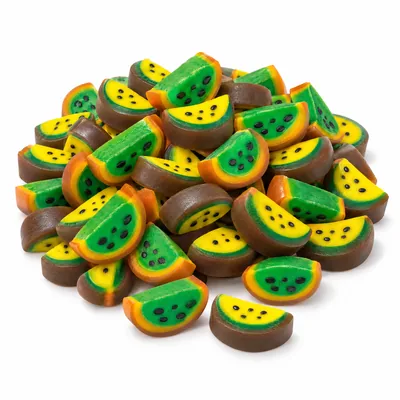
- Fruit slices: wheel-cut pieces with a lighter, contrasting center.
- Gumdrops: glossed domes with a sugar coat, an old European sweetshop staple.
What are foam and marshmallow candies?
Foam candy is sugar syrup whipped with air and set light, which is why a foam case looks huge and weighs very little. In Swedish it is skum, treated as its own category rather than a marshmallow subtype. The production story, gelatin versus egg white and extruded versus deposited, is in our marshmallow candy guide.
- Foam strawberries (skumjordgubbar): the reference piece of the family, light with a soft bite.
- Foam bananas: the yellow classic, gelatin-free in the BUBS version we import.
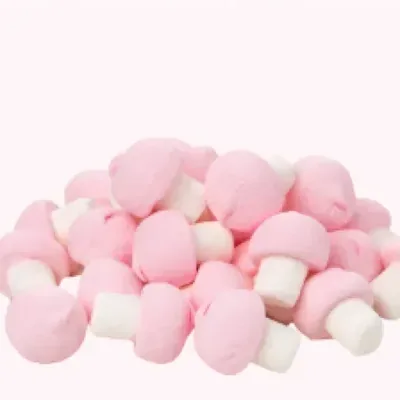
- Foam mushrooms: domed caps and pale stems, built in two depositing passes.
- Ice cream cones: the swirl-topped cone shapes, also deposited.
- Foam twists: extruded ropes with a springier, denser bite than deposited shapes.
- Sour foam strawberries: a foam body under a sour sugar coat, soft and sharp at once.
- Cloud shapes: soft deposited pieces in pastel colours, sold in small bags.
What are licorice candies?
Licorice is the most regional family in Europe: sweet and soft in Sweden, sharply salty in Finland, and firm across the Netherlands.
- Sweet licorice: soft, mild black pieces and the standard Swedish entry point.
- Salty licorice (salmiak): the Nordic style that trades sweetness for a salt note.
- Double salt licorice: the stronger grade, for people who already like the first one.
- Dutch drop: the Netherlands' family of sweet, salt and double-salt pieces, often firm.
- Licorice pastilles: small, firm, slow-dissolving pieces.
- Licorice ropes: twisted ropes with a dense, slow chew.
What are sour candies?
Sour is a treatment rather than a base: an edible acid sits in the body, in a sanded sugar coat, or in a sprayed layer, and the placement decides how the bite arrives. The mechanics are in our sour candy guide.
- Sanded sours: visible sugar-and-acid grit, sweet for a second and then sharp.
- Sprayed sours: a finer, matte acid layer with less sugar in the way, so the hit lands immediately.
- Fizzy pieces (brus): acid plus a carbonate that prickles as it dissolves.
- Sour belts and straps: wide chewy straps under an acid coat; the Finnish straps we stock run 19.7 inches.
- Sour discs and coins: flat, firm, heavily coated pieces, the S-Märke style.
- Sour shots: small, dense pieces built for one quick hit, the Hallonshots shape.
Six cases across these families


What are hard candies and pastilles?
Hard candy is boiled furthest: the syrup sets as a glass, so the family is built for length and travel. Pastilles are its firm, slow-melting cousin.
- Boiled fruit drops: glassy single-flavor pieces, one of the oldest formats on the shelf.
- Polkagris: the Swedish pulled peppermint rock, striped into canes.
- Lollipops: the stick format, plain or layered.
- Sugar cubes (sockerbitar): the soft Swedish cube format that sits between hard and chewy.
- Pastilles: small firm pieces that dissolve slowly, the format Swedish and Dutch makers still run.
- Hard caramels: cooked to a snap, so they crack rather than pull.
- Mint discs: the after-dinner format, chalk-white and glossy.
- Barley sugar: the old pulled-sugar sweet, clear amber and slow to dissolve.
What are chewy candies and caramels?
Chew is the most forgiving family in a shop: dense pieces survive pockets, warm rooms and long trips, and they sell at the register rather than off a wall.
- Toffee: butter or cream cooked to a dense chew, sometimes with nuts.
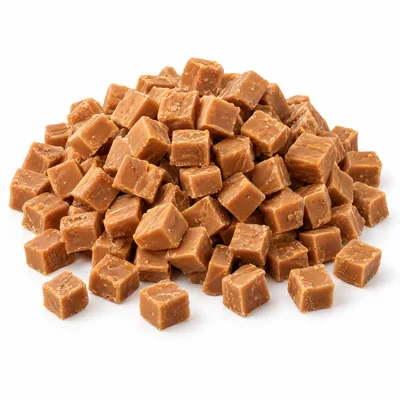
- Fudge: soft, sugar-grainy and slow-melting; our Lonka cases run vanilla, salted caramel and licorice-raspberry.
- Soft caramels: the softer end, built as bonbons and bites.
- Nougat: a chewy, lightly aerated mass, with nuts or plain.
- Fruit chews: single-fruit wrapped pieces, the tablet format.
- Chewy cubes: firm wrapped cubes for register bowls.
- Chewy rolls: spiral rolls with a long, soft pull.
What are chocolate and coated candies?
Chocolate brings its own physics: cocoa butter sets firm at room temperature and softens quickly in the hand, which is why the family behaves differently in a warm shop. The Swedish bar shelf specifically is covered in our Swedish chocolate guide.
- Milk chocolate bars: the everyday format and a strong national habit across the Nordics.
- Wafer-filled bars: crisp layered bars with a light center.
- Combination bars: caramel, nougat or crisp pieces enrobed whole.
- Pralines: filled chocolate pieces sold by the box.
- Chocolate coins: foil-wrapped coins tied to the winter holidays.
- Chocolate-coated foam: dipped marshmallow and foam shapes.
- Chocolate-coated licorice: the salty-sweet crossover, big in the Nordics.
What are seasonal and holiday candies?
Seasonal candy is a calendar: European makers tend to bring the same shapes back in the same weeks every year, and the schedule barely moves.
- Julgodis (Christmas candy): the December block of chocolate, toffee and pick-and-mix.
- Advent calendar candy: 24 small doors, often with a piece behind each one.
- Marshmallow Santas: the Christmas figure that Cloetta's history dates to the 1960s.
- Påskgodis (Easter candy): egg shapes and spring colours on the same shelf logic.
- Halloween shapes: skulls, eyes and gummy body parts for the October window.
- Valentine's hearts: heart gummies and fiskar in the weeks before February 14.
- Midsummer candy: the Swedish June table, built around pick-and-mix and fruit shapes.
How do shops buy these candy types?
Building a wall from this list starts with matching families to formats.
- For a pick-and-mix wall: lead with firm gum and sour pieces, then foam for visual range.
- For register baskets: 90 g bags and wrapped chews.
- For events and dessert tables: slices, rolls and foam shapes, which photograph best.
- For classic candy jars: hard drops, sockerbitar and fudge.
- For the sour shelf: pacifiers, discs and shots in one run, with coated pieces placed low so acid dust falls away from softer candy.
- For shops: most of the families above run through our case range, and you can apply for a wholesale account to order it mixed by the case.
Ordering runs by the case, mix and match, with no order minimum, and applications approve automatically. Cases ship from Santa Fe Springs, California, so a first order can test four or five families without committing to a season.
Browsing by texture rather than flavor? The store shows the cases and their public prices, and our gummy candy guide goes one family deeper, base by base.
Frequently asked questions
How many types of candy are there?+
There is no official count, because a type is a base, a shape and a treatment in combination, and makers keep adding. This page uses eight working families: gummy, foam, licorice, sour, hard, chewy, chocolate and seasonal. Inside them it names 60 types, which is enough to cover almost everything you meet on a European pick-and-mix wall or in a US candy aisle.
What is the difference between a gummy and a jelly?+
A gummy is set firm, so it resists the tooth before it gives; a jelly is set softer and shorter, so it breaks or melts rather than bouncing. The difference comes from the setting agent and the water left in the piece, not from the flavor. Swedish ranges use both bases widely, and a pick-and-mix wall normally carries them side by side.
Is sour candy a type of candy?+
Sour is a treatment rather than a type. Almost any base, foam, gummy, chew or hard, can carry an edible acid in its body, in a sanded sugar coat, or in a sprayed layer, and each method changes how the sourness arrives. That is why the sour family on this list is organized by coating rather than by shape.
What is the difference between marshmallow and foam candy?+
Foam candy is sugar syrup whipped with air and set light, and Swedish skum is treated as its own category rather than a marshmallow subtype. Compared with the American campfire marshmallow, skum is usually less sweet and more springy, and it is a pick-and-mix staple rather than a toasting ingredient. The names differ by country; the physics do not.
What is the difference between toffee and caramel?+
Both are cooked sugar with dairy, and the split is texture. Caramel is cooked to a soft, flowing set, while toffee goes further, to a dense chew or a hard snap. A chewy middle ground exists, which is why shops often stock both. If a customer asks for the softer piece, that is caramel; the firmer one is toffee.
Which candy types should a new shop stock first?+
Start with the families that behave well in a bin: firm gum and sour pieces for volume, foam for visual range, and one chewy case for the counter. Slices and rolls are the photograph line for events. Four to six cases across three or four families already make a complete wall, and you can widen once the turn rates are in.
Are Swedish candy types different from American ones?+
The physics are the same; the vocabulary is not. Sweden leans on skum, gummis and sockerbitar, sells most of it loose by weight, and gives sour and salty licorice far more shelf space than US stores do. An American reader will recognize every base on this page, just not many of the names.
Keep reading

Gustav Lindqvist · Candy Master
Gustav grew up in Sweden on a strict Saturday-candy schedule, mixing his lördagsgodis bag at the lösgodis wall before he could spell salmiak. He has spent years tasting his way across Scandinavian candy, and now curates the range at TheSweetsTruck, from BUBS sour skulls to the saltiest licorice most people cannot finish.
Last updated 10/13/2026