Jelly Candy: The Category Explained
What jelly candy is, how pectin, starch and gelatin sets change the bite, the Nordic gelée tradition, and which jelly cases we stock wholesale.

Jelly candy is a soft, translucent sweet set with pectin, starch or gelatin rather than cooked hard. Pectin gives a short, clean bite that releases fruit flavour fast. Starch gives a firmer, slower chew. Gelatin gives bounce. In the Nordics the format is called gelée and it is usually sold loose by weight. We import Swedish and European candy into California. Jelly is the category that gets flattened into "gummy" on American shelves, which is a shame, because the different sets eat nothing alike.
Jelly is a set, not a flavour
The word jelly describes what holds the piece together, not what it tastes of. Every jelly candy is the same basic thing: sugar and glucose syrup, water, acid, flavour, colour, and one gelling agent that turns the liquid into a solid you can pick up.
The gelling agent is the whole product. It decides how hard the piece is at room temperature, how fast it melts, how long the flavour takes to arrive, and how it behaves in a warm shop. Confectioners choose it before they choose the flavour.
That is why two candies with identical ingredient panels apart from one line can feel like different categories in the mouth.
The three sets, compared
Set: Bite: Flavour release: Behaviour at room temperature
Pectin: Short and clean, breaks rather than stretches: Immediate, very fruit-forward: Holds shape well, does not melt
Starch: Firmer, slower, requires working: Gradual, builds over the chew: Very stable, tolerates warmth
Gelatin: Elastic, bounces before it gives: Medium, arrives as the piece melts: Softens noticeably in heat
Pectin comes from fruit, mostly citrus peel and apple pomace. It sets by acid and sugar rather than by cooling, which makes it fussier to produce and more expensive to run. The payoff is the cleanest fruit flavour of the three, because pectin releases in the mouth almost instantly instead of holding the flavour hostage inside a gel. Pectin jellies are the traditional European fruit jelly, and they are naturally free of animal ingredients.
Starch is the workhorse. It sets by cooling, it is cheap, it is forgiving, and the pieces survive anything a shop can do to them. Starch jellies are what most wine gums and older Nordic gelée pieces are built on. The trade-off is a firmer, chewier bite that some shoppers read as tough.
Gelatin is the American default and the source of the springiness people associate with the word gummy. It melts at body temperature, which is why gelatin candy feels like it dissolves rather than being chewed away. It is also the one set that is an animal product.
Why "jelly" and "gummy" are not the same word
In the US, gummy has swallowed the whole category. In Europe, the two terms describe different pieces on the same shelf.
A gummy is dense, firm and elastic, usually gelatin set, and it holds a sharp moulded shape. A jelly is softer, more translucent, often pectin or starch set, and it is usually finished with a sugar coat or a light glaze rather than a wax polish.
Practically, if you can see through it and it gives under light thumb pressure, it is a jelly. If it is opaque, springy and resists your thumb, it is a gummy. Our Swedish gummies guide covers the other side of that line, and Swedish candy textures puts both in context with foam, chew and slices.
The Nordic gelée tradition
Gelée is a fixture of the Swedish pick-and-mix wall and has been for decades. It is not a niche piece. It sits alongside skum, gum and licorice as one of the formats a Swedish shopper expects to find.
Two things distinguish the Nordic version. First, it is almost always sold loose by weight rather than pre-bagged, so the pieces are made to look good in bulk and to scoop cleanly without clumping. Second, the sour coat is a genuine part of the tradition rather than a novelty. A sour-coated gelée piece is standard, not a variant.
The result is a candy that reads as fruit rather than as sugar, which is a large part of why Swedish candy has the reputation it does. We dig into that in why Swedish candy is so good.
What jelly candy asks of you at retail
Jelly is the most humidity-sensitive category after foam. Sugar-coated pieces pull moisture out of the air, the coat dissolves, and the pieces bond into a block. That is not a defect, it is physics, and it is fixable with basic discipline.
Keep bins away from doors, windows and anything that vents warm air.
Rotate stock so no piece sits in an open bin for weeks.
Refill from sealed cases rather than topping up a half-empty bin.
Do not run jelly in the display slot that gets afternoon sun.
Done properly, jelly is a high-margin bin because it is light, it scoops fast and shoppers take generous portions of anything translucent and colourful. Done carelessly, it is the bin you throw away. Candy shrinkage and waste has the full method.
What we carry
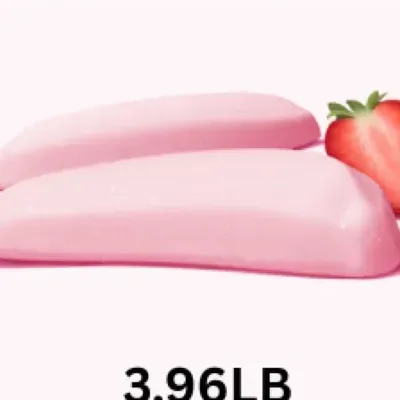
The gelée piece in our range is from Aroma: Aroma Sour Strawberry Banana in a 3.97 lb case. It is the classic Swedish loose-scoop format, sour coated, in the two flavours that anchor almost every Swedish wall. Our Aroma brand page has more on the maker.
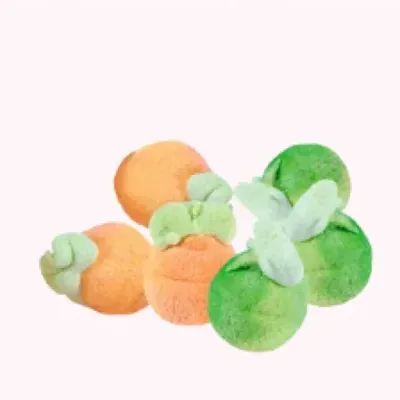
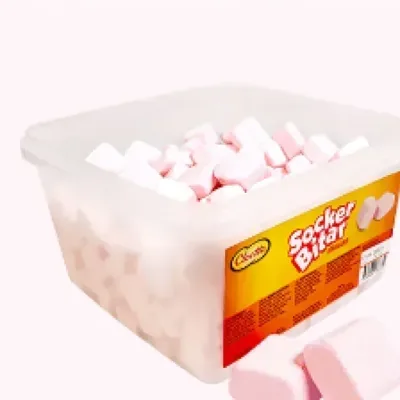
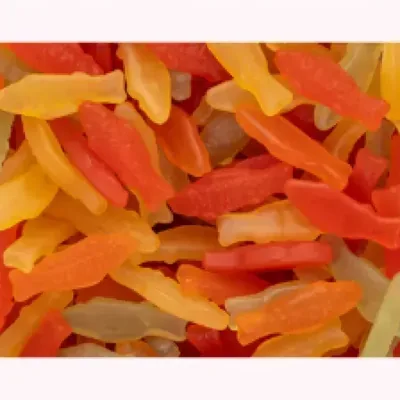
Around it, the softer jelly-adjacent pieces we stock are Bulgari Fruits in a 1 kg case, Strawberry Sugar Cubes, or sockerbitar jordgubb in a 1.81 lb case, and Pastel Fish, which sits on the soft end of moulded candy rather than the firm end.
We publish dietary flags only where we hold the data, and none of these four carry one in our system, so we make no vegan, vegetarian or gelatin claim about them. Where we do hold the data it is on the product page. If you specifically need gelatin-free stock, does Swedish candy have gelatin lists the lines that are flagged.
Jelly and gelée cases
If you want the narrower question of fruit jellies specifically, real fruit against flavouring and sugar-coated against glazed, that is in jelly fruit candy.
How to buy jelly candy wholesale
We import direct and ship from our Santa Fe Springs, California warehouse to retailers across the US and Canada. Domestic orders land in about 2 business days. Canada ships DDP, duties paid at checkout, in 3 to 5 days.
Order by the case, mix and match, with no order minimum. Tier 1 list pricing is public on every product page, and approved accounts can be promoted to better volume tiers. Wholesale accounts approve automatically when you apply. NET payment terms are offered to selected partners, based on order history. Shipping is UPS Ground or UPS Express, with a pallet option on orders of $2,000 or more, agreed by email.
Frequently asked questions
What is jelly candy made of?+
Sugar, glucose syrup, water, acid, flavour and colour, set with one gelling agent. That agent is pectin, starch or gelatin, and it determines the texture entirely. Sugar-coated jellies get a final sanding of sugar and acid, glazed ones get a thin food-grade coating instead.
What is the difference between jelly candy and gummy candy?+
Jelly is softer and usually translucent, often set with pectin or starch, and finished with sugar or a light glaze. Gummy is denser, springier and typically gelatin set, holding a sharp moulded shape. In the US both get called gummy, but they are separate pieces on a European shelf.
Is jelly candy vegan?+
Only if the set is pectin or starch rather than gelatin, and only if nothing else in the recipe is animal derived. Pectin jellies usually are, gelatin jellies never are. We publish a dietary flag only where we hold the ingredient data, so check the individual product page.
What is gelée candy?+
Gelée is the Nordic name for the soft jelly format sold loose from a pick-and-mix wall, commonly sugar or sour coated. It is a standard fixture in Swedish candy shops rather than a specialty item, and it sits alongside skum, gum and licorice as one of the expected textures.
Why does jelly candy stick together in the bin?+
Sugar coating attracts moisture from the air. The coat dissolves, the surfaces bond, and the pieces fuse. Keep jelly bins away from doors and heat sources, rotate stock, and refill from sealed cases instead of topping up. It is a storage problem, not a product fault.
Does jelly candy contain real fruit?+
Sometimes. Pectin itself comes from fruit, and some jellies use juice or puree, but many use flavouring over a plain sugar base. Fruit content is a recipe decision, not a category rule, and the ingredient panel is the only reliable place to check.

Gustav Lindqvist · Candy Master
Gustav grew up in Sweden on a strict Saturday-candy schedule, mixing his lördagsgodis bag at the lösgodis wall before he could spell salmiak. He has spent years tasting his way across Scandinavian candy, and now curates the range at TheSweetsTruck, from BUBS sour skulls to the saltiest licorice most people cannot finish.
Last updated 8/23/2026